Tag Archives: premier league

700 Games Later

Last Saturday, Manchester United beat Wigan 4-0 in a run-of-the-mill Premier League game. Wigan are a small, slightly bizarre club from the north of England. Manchester United also play in the north, but they have more Azerbaijani fans than Wigan do season-ticket holders. This is football, the most monetized sport around, and Manchester United were playing at home. Wigan never had a prayer.
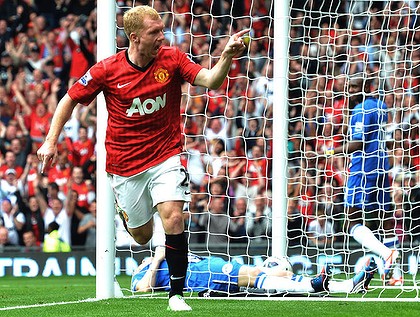
What made this game worth watching, what made it Saturday’s most endearing match – especially in contrast to John Terry’s return to Loftus Road, Anton Ferdinand’s childish non-handshake, and the dismal 0-0 draw that followed – was the shy-looking redhead who opened the scoring (a tap-in) and the almost-40-year-old whose darting runs and incisive dribbling troubled the Wigan defense all afternoon. If you don’t know where I’m going with this – if the names Ryan Giggs and Paul Scholes, or, as they’re commonly referred to, “giggsandscholes” (one syllable), don’t ring a bell – then either you’ve been living in a cave for the last 20 years or you don’t have cable. (Which is worse? I’ll leave that for you to decide.)

Continue reading

Tagged , , , , , , , ,

Wigan Athletic: The Coolest Team Around

The smallest club in the world’s most famous football league has pulled off more great escapes than Harry Houdini and Steve McQueen combined. The Premier League has never been kind to so-called little guys, but, then again, Wigan Athletic – the team from rugby-ville that plays in a half-empty stadium – has never been especially kind to the Premier League. These days, Wigan is irresistibly surreal, a mix of old-fashioned virtues and modern flare, like a 1930s Ford masquerading as Barcelona on wheels.

Wigan is fundamentally unattractive. It’s not that it’s an ugly part of the world, though it is, nor that it’s never boasted an established football team, though it hasn’t, but that a kind of glorified boredom hangs over the place. In Wigan, you suspect, it always rains, even during the Olympics. Current West Ham midfielder Mohamed Diame says the town is “crappy” and the girls aren’t great either. Wigan has always been associated with the classic meat pie, a footballing delicacy that has little to do with actual meat but is nevertheless the food item every proper fan eats at half time. The place is a shithole – only you can’t help but feel affection for it.

Continue reading

Tagged , , , , , , , , , ,

A Blue Revolution Powered By The Green Stuff

“In soccer, money is destiny,” Brian Phillips wrote in 2011. “And destiny’s not distributed equally.”

At its best, the Premier League is an exhilarating spectacle sustained in part by a moneyed elite that spends millions on superstar players. At its worst, the Premier League feels like a lame excuse for the moneyed elite to play for more money. In the early 1990s, English clubs broke away from the old Football League and formed their own competition designed to realize the commercial potential of a new, streamlined league that would fully embrace live television. Since then, a small band of financially empowered teams has dominated. Sometimes they’re a “Big Four;” sometimes they’re a “Big Three;” once in a while they’re even a “Big Five.” While those clubs vie for major honors, the rest of the Premier League invents and then competes in a series of phony battles, the most notable of which is “The Battle To Avoid The Drop” and the most banal “The Battle To Finish In The Top Ten If, By April, We’re Too Good For The Drop But Not Good Enough For Europe.”

Occasionally, it’s possible for traditionally weak teams to break into the top tier; however, such maneuvers require the type of money that Chelsea, traditionally a promising but never truly successful club, has enjoyed since 2003, when Russian billionaire and celebrity yacht-owner Roman Abramovich decided, virtually on a whim, that he rather liked Stamford Bridge. After a couple of seasons of steady investment, self-proclaimed “Special One” Jose Mourinho secured Abramovich’s team the Premier League title. And last year, after numerous failed attempts, Chelsea became the first London club to win the Champions League, or European Cup — as it was known before a certain fascination with the green stuff necessitated a rebranding.

Continue reading

Tagged , , , , , , , , , ,

The Beautiful Weirdness of the Community Shield

Every August, one week before Premier League kickoff, the previous season’s FA Cup winner faces off against the reigning league champion in the FA Community Shield. Manchester United has won the annual curtain-raiser 19 times, more often than any other team, but Sir Alex Ferguson, who engineered half of those triumphs, doesn’t consider it a legitimate trophy. (Then again, Fergie can afford to dismiss ten victories; he’s the game’s most decorated coach.) The Community Shield is probably the most ambiguous thing football has ever produced, and, in a sport that still hasn’t settled the handball rule, that’s saying something.

Originally, the Community Shield wasn’t the Community Shield at all; it was the Sheriff of London Charity Shield, and instead of pitting two money-grubbing big-time teams against each other in a sponsored-by-McDonald’s spectacle, it served as a 90-minute diplomatic necessity, fought between a team from the Amateur Football Association and one of its professional counterparts. Scottish whiskey distiller Baron Dewar, an early promotional expert who also founded the Theatrical Sports Five Miles Cycling Championship Shield, is credited with conceiving the event. The first-ever Sheriff of London Charity Shield match finished in a tie: at the end of regulation, Sheffield United (the professional representative) and Corinthians (the amateur representative) had each scored a single goal. With United unwilling to play extra time, the two teams elected to “share” the six-foot trophy. It was all a far cry from Mickey D’s.

Continue reading

Tagged , , , , , , , , , , , ,

Fearsome Chelsea Prepare for the Future

Marko Marin is not an elfin warrior. The pint-sized, blond German international may look more like an extra from a Lord of the Rings movie than a professional footballer, but his flashy talents have nothing to do with Middle Earth. Indeed, from the point of view of Chelsea’s many rivals, Marin and his fellow new signings, Oscar and Eden Hazard, are a little too real; their arrival at Stamford Bridge marks the beginning of an aggressive new era.

Over the past three seasons, Manchester City’s owners have routinely outperformed Roman Abramovich in the indulgent-spending stakes. That gradual power shift culminated in City’s Premier League title success. Now Abramovich is biting back.

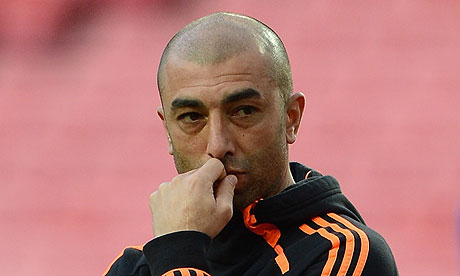
While City triumphed in England last season, Chelsea saved their champagne for the Champions League final. The Blues’ undeserved yet brilliantly cathartic penalty shoot-out win over Bayern Munich — in Bayern’s home stadium, no less — capped a turbulent season replete with managerial controversy and several dressing-room revolts. Many critics dismissed Chelsea’s triumph, however, claiming the team had won the tournament by “parking the bus” and playing “catenaccio” (By the way, this is one of my pet peeves. Catenaccio is not a synonym for “defensive.” It is a system built around a sweeper and man-marking, two tactical devices that are almost obsolete in modern football). Some even went as far as to blame Di Matteo’s Italian ancestry.

Continue reading

Tagged , , , , , , , , ,

Arsenal Crisis? It’s That Time of Year

In the weeks leading up to Premier League kick-off, fans know to expect a few things. Newspaper pullouts, gigantic fixture lists and billboard advertisements are all necessary reminders of the approaching excitement, without which we might begin to doubt the once reliable word of the kitchen calendar. But even if Sky suddenly gave up on football montages, we’d know it was August, because now there’s an even surer sign. It’s always exactly this time of year that Arsenal’s off-season rumblings become painfully audible.

Arsene Wenger must be getting a little discouraged. In 2011, he watched Arsenal’s two most dangerous players, Samir Nasri and Cesc Fabregas, join rival Champions League teams. And then, earlier this summer, Robin van Persie sensationally refused to sign a new contract.

Continue reading

Tagged , , , , , , , , ,

What’s Next For Andy Carroll?

Brendan Rodgers is one of an ever-increasing number of football managers devoted to the mystical Barcelona Way, the aesthetically pleasing football method that, after a couple of years of obscurity, suddenly popped into our collective consciousness in 2008. The Barcelona Way got Rodgers where he is now. Without the inspiration of Cruyff, Guardiola and company, he would never have succeeded in teaching a Swansea team composed of honest, lower-league professionals to “play football the right way.” And had Swansea employed traditional kick-and-run tactics, they would probably have been relegated. And had they been relegated, Rodgers almost certainly wouldn’t have been hired by Liverpool.

It’s a bummer for Andy Carroll that Barcelona exist.

The really frustrating thing about Andy Carroll is that he fooled us all. That six-foot something bludgeon of a center forward, that Anfield flop, that money-grubbing drunk: he had us. All of us. When he scored ten goals during the first half of the 2010/11 Premier League season, when he routinely scared the bejesus out of real-life European defenders, we all thought he was good. Not just good; good. Future-of-English-football good. Gonna-bring-home-the-2018-World-Cup good.

These days, the best you can say about Carroll is that he probably didn’t do it on purpose. No footballer can control tabloid hype. Carroll didn’t decide to have his potential international future elevated from “maybe decent” to “certainly brilliant,” The Sun decided for him. Even in his glory moment – and moment is certainly the right word — Carroll probably knew that the press was only praising him to the heavens in preparation for a precipitous trip back down.

Continue reading

Tagged , , , , , , , , , ,

Death of the Striker?

There’s nothing better than an accomplished center forward. A selfish, two-footed goal-scoring machine; a Gerd Muller or a Marco van Basten. Strikers score goals and goals win games, or so the cliché goes. Of late, however, strikers have become expendable. Indeed, the position seems to be going out of fashion.

When David Villa broke his leg at the Club World Cup, Spain manager Vincente Del Bosque was left with a tactical conundrum. Should he take a risk on misfiring Chelsea striker Fernando Torres, or field fatiguing Athletic Bilbao front man Fernando Llorente instead? In the end, Del Bosque rejected both options. When Spain kicked off against Italy, they did so without a recognized striker. Flanked by David Silva and Andres Iniesta, Cesc Fabregas started through the middle as a false nine – Lionel Messi’s position for Barcelona.

That approach proved unsuccessful: Italy’s back three coped easily with the toothless Spanish attack, and Torres returned to the starting line-up for the next game, versus the Republic of Ireland. But the willingness of the reigning European and World champions — football trendsetters for the last four years –to countenance a striker-less system raises important questions about the future of the position.

Continue reading

Tagged , , , , , , , , ,

Shankly Is Proved Emphatically Wrong

The weeping Shay Given expressed a grief that transcended club boundaries. Football mourned for a man who died too young.

A game that glories in its own pomposity, that claims to represent life and death in all their harrowing reality, was rocked Sunday by news of the suicide of one of its great and good.

Gary Speed — son, father, teammate and coach — was respected by all who knew him. His patience, charisma and dedication powered an understated yet elegant career. In an era of transition and financial overhaul, Speed’s modest and straight forward interactions with fans and the press made him a role model among many less virtuous peers.

“He played the game the right way: with commitment, with honesty and with a sense of adventure,” wrote Henry Winter in The Telegraph. The commitment earned him more than 500 Premier League appearances; the sense of adventure guided his selection of a number of young, inexperienced Welsh players. The honesty made him one of the best-loved men in the game.

Continue reading

Tagged , , , , ,

Balotelli Is Starting To Define The New City

While failed bathroom experimentation may have condemned his pyrotechnic career to the realms of lazy humor, Mario Balotelli’s footballing talent has finally found the greenery most conducive to its belated blossoming.

The frown so intrinsically linked with his controversial endeavor failed to disappear, but in this culmination of careful improvement Balotelli showed that he’s more than just a troublesome ornament.

After years of almost constant indignation, it was easy to sympathize with the forward’s celebratory message. “Why always me?” read his undershirt – revealed just after the first of six Manchester City goals.

Continue reading

Tagged , , , , , , ,