United’s Problems Resurface On A Surreal Day

In May, when we look back on the season that was, January 8 will stand out as the day it all went bonkers. 

Budweiser, the new official sponsors of the FA Cup, must have been delighted.

A competition supposedly bereft of its magic was the backdrop to arguably the wildest morning in recent footballing history.

Even with Darren Fletcher unavailable, Tom Cleverley injured and Anderson predictably mediocre, no one saw it coming.

Paul Scholes’ retirement last summer had a sense of finality; conventional wisdom held that the once-great midfielder had called it quits at just the right time. Scholes’ testimonial was marked by a 10-minute cameo from youngster Paul Pogba, a midfielder that didn’t look out-of-place in a United side featuring several first-team players.

Sir Alex Ferguson may not have been particularly happy about Scholes’ retirement, but he was resigned to it. United’s intermittent attempts to sign Wesley Sneijder over the summer confirmed their desire for a new creator. The club was  moving on.

And then, on Sunday morning, Paul Scholes announced his return to professional football.
Continue reading

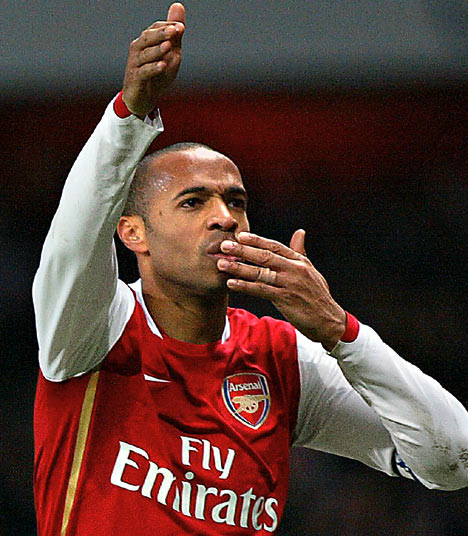
Henry Is Jeopardizing His Body And His Legacy

Thierry Henry’s statue now stands proudly in front of Arsenal’s Emirates Stadium, but Henry is not the player he was in 2007, when he sealed a sixteen-million-pound move to Barcelona. The mercurial goalscorer renowned for his pace, skill and movement is no more. Henry is a slower and more temperamental version of his former self. While he is still capable of isolated moments of brilliance, his star is waning.

For Arsenal manager Arsene Wenger, signing Henry is an opportunity to remind beleaguered supporters of the silver lined days of yore, and to inspire inexperienced players like Theo Walcott and Alex Oxlade-Chamberlain to emulate their illustrious predecessor. Wenger understands that, while Henry’s impact on the field is likely to be negligible, his presence in the dressing room could be priceless.

Continue reading

Lindegaard Is Nothing If Not Confident

Anders Lindegaard is not short on self-confidence. In January the well-built, combative Dane told reporters that he hadn’t joined United to “pick my nose.” That was before Lindegaard realized he was the only goalkeeper in Premier League history never to have conceded a goal.

The six-foot-four-inch keeper cultivates an aura of invincibility. “Calmfidence – 6” Lindegaard tweeted on Boxing Day. Lindegaard’s Twitter account provides a window into his personality. His 65,279 followers are willing to tolerate his unyielding arrogance. Anders Lindegaard does what he wants.

He started the season as the clear understudy to United’s big-money goalie, David De Gea, who is meek and skinny where Lindegaard is boastful and broad. But since then the hierarchy has blurred.

Lindegaard has transmitted his off-field swagger to the Manchester United penalty area; winning over fans with his commanding direction and hot temper. The anemic De Gea is sporadically brilliant but has failed to live-up to pre-season expectations.

Continue reading

Top Ten Football Things Of 2011

With the year edging towards completion, it’s time to review a great twelve months for footballing innovation..

1. The BlizzardThe best idea of 2011. The Blizzard is a quarterly publication designed to defy the constraints of mainstream media. Edited by Jonathan Wilson, the magazine/journal gives a variety of high quality writers the space to stretch their creative muscles.

The Blizzard

2. A Life Too Short, by Ronald Reng- In a year where yet another celebrity sportsman took his own life, Reng’s book is an important reminder of football’s brutal pressures. A Life Too Short is the biography of former Germany goalkeeper Robert Enke. It details Enke’s struggles with depression and eventual suicide. Moving, but never sentimental.

A Life Too Short

3. Fox Soccer.com- While Fox Soccer Channel still resembles the work of an intoxicated twelve year-old, Fox deserves to be commended for its success on the online platform. Foxsoccer.com is a well-designed, smoothly operating website featuring coverage of all Europe’s major leagues, MLS and South America. Editorials by the likes of James Horncastle, Rupert Fryer, Andy Brassell and Amy Lawrence enhance an impressive product.

Fox Soccer

Continue reading

The Beloved Autocrat: How Mancini Conquered The Fans

Since his arrival in the winter of 2009, Roberto Mancini has made quite an impression.

Maybe it was the cute Italian accent or the gradual improvement in City’s defense. Something about Inter’s handsome former boss appealed to a set of fans still acclimating to their club’s financial and footballing altitude.

Or maybe it was the scarf. Perhaps Mancini’s initial wardrobe choice had nothing to do with the weather. During a period of tumult, the simple yet luxurious attire of Mark Hughes’ successor provided a blast from the past in sharp contrast with City’s constant talk of the future. City needed that. More than any of their million-pound playing assets they needed an acceptance of what used to be as they embraced bullish expectations of what had yet to arrive.

Continue reading

Tagged , , , , ,

Moment #4: Ironstein And The Revolting Masses

This piece is by Alastair Bellany – a historian working at Rutgers University.  Alastair boasts a single chili pepper (denotes hotness) on ratemyprofessors.com. He is unlikely to garner more.

Not Alastair Bellany.

It is difficult to convey just how bad my primary school football team was in the 1978-9 season. They always lost; and they always lost heavily. Playground opinion blamed the goalie—he had all the vices of immobility (he couldn’t or wouldn’t move to get the ball) but none of its virtues (hit the ball straight at him and, miraculously, his legs would move—just enough to let the ball roll between them). I blamed the coaching. One kid got onto the team after watching a show on TV about Brazilian football. He became convinced he was Pele, and started dancing around the ball Brazilian style. Unfortunately, dancing was more or less the sum of his footballing skills. But this apparently didn’t bother the coach—he was on the team.

I tell you this not to slight my old classmates or my old teachers. No, I tell you this just to make something very clear. I am really bad at football. So bad, indeed, that I never made my primary school team. I just wasn’t good enough. Not even good enough to be goalie. Yes, that bad.

Continue reading

Tagged , ,

The Problem With Pantheons: Football’s Reductive Fascination

With hair spiked and narcissistic boot inscription glittering, Cristiano Ronaldo will emerge from the Bernebeau tunnel to the sort of fanfare once reserved solely for Michael Jackson and The Beatles. A group of smiling Japanese tourists tucked away in a corner will enjoy 10 seconds of celebrity, as their “We Love Cristiano” poster greets the eyes of watchers around the world. A stadium of fans will rise together to cheer one-half of modern football’s most overwrought conundrum.

Several seconds later a shorter, less assuming young man will make his entrance. This time, though, the screams of tourists in the stands will be drowned out by the whistles of 80,000 Merengues. In Madrid, they’ve never quite taken to Lionel Messi.

Then statistics will appear on the television. Cristiano Ronaldo has scored 26 goals in all competitions this season (including internationals). Messi betters that record by three. Just one goal on Sunday would tip the balance for either player, though. Goals in the Classico tend to take on a significance that transcends the numerical.

“Who is the best in the world?” Jose Mourinho asked in 2010. “There are two options, Cristiano? Messi?” Such is the footballing public’s almost unanimous consensus. They are the figureheads of Europe’s two best teams; it is natural that choice comes down to them and them alone.

Choosing between them has sparked intense wrangling.

In a cyber powered footballing forum dominated by Michael Cox devotees and facilitated by new-fangled Opta technology, the argument blossomed from pub-table banter into global controversy. It will never be resolved and, really, no one wants it to be. “Sports Entertainment,” as Rory Smith dubbed it in  The Blizzard, feeds off of such dull yet  addictive melodrama.

Continue reading

Shankly Is Proved Emphatically Wrong

The weeping Shay Given expressed a grief that transcended club boundaries. Football mourned for a man who died too young.

A game that glories in its own pomposity, that claims to represent life and death in all their harrowing reality, was rocked Sunday by news of the suicide of one of its great and good.

Gary Speed — son, father, teammate and coach — was respected by all who knew him. His patience, charisma and dedication powered an understated yet elegant career. In an era of transition and financial overhaul, Speed’s modest and straight forward interactions with fans and the press made him a role model among many less virtuous peers.

“He played the game the right way: with commitment, with honesty and with a sense of adventure,” wrote Henry Winter in The Telegraph. The commitment earned him more than 500 Premier League appearances; the sense of adventure guided his selection of a number of young, inexperienced Welsh players. The honesty made him one of the best-loved men in the game.

Continue reading

Tagged , , , , ,

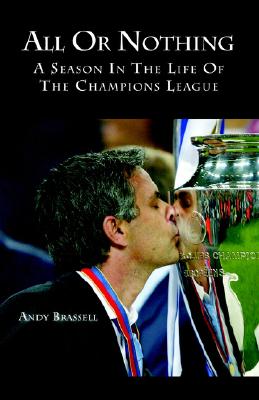
INFTH Book Review: All Or Nothing

At football’s European epicenter lies the world’s premier annual sporting competition. The Champions League shapes the
ambitions of clubs across the continent; all of them dreaming of the same ungainly, two-handled trophy. All or Nothing is the story of that tournament. The story of the teams, fans and players that make-up modern football’s most defining edifice.

Andy Brassell sets out to understand the Champions League’s transcendent influence on European club football, to examine how the tournament affects competitors big, small and in between. Unfortunately, Brassell’s account of one “season in the life of the Champions League” fails to compel. It’s not fresh, it’s not new and it’s not exciting. Moreover, only eight years after publication, it’s hopelessly out of date.

Continue reading

Tagged , , , , , ,

Moment #3: England Beat Argentina In Five Minutes

This piece is by Paul Price, sole editor of The Technical Area.

It was a cold, autumnal Saturday evening in November 2005 in Geneva, Switzerland. With England having already booked their place at the 2006 World Cup, they had the opportunity to pit their wits against one of the world’s best teams in a friendly match. But it wasn’t Switzerland that England were facing, it was the Old Enemy, Argentina.

International Friendly. There has never been such a match between these two nations. England-Argentina is a bitter rivalry that goes way back, as far as the 1966 World Cup in fact, when England manager Sir Alf Ramsey ordered his players not to shake hands with their Argentinean counterparts after a controversial affair. Then there was  the “Hand Of God” controversy in the Quarter Finals of the 1986 World Cup, where Diego Maradona used a clenched fist to send the ball beyond the advancing Peter Shilton. Add to that the 1982 Falklands War and you have a history that renders the term “friendly” quite ridiculous.

Continue reading

Tagged , , , ,