Stuff Elsewhere

Great football coverage from around the web…

Miguel Delaney on Barcelona-Chelsea. Still worth a read, even after the first leg.

David Hershey selects his Premiership Team of the Season.

Jason Burt on Roberto Di Matteo and Chelsea.

David Yaffe-Bellany’s latest Fantasy Football advice column.

Dave Taylor on Del Piero and Totti.

Check out our Blog Roll (bottom of the site) for more excellent football coverage.

It would be remiss of me not to mention the death of Piermario Morosini. Here’s the tragic footage:

“Look At Me. I Am Chinaglia”

“The essence of Chinaglia’s world is style” wrote Sports Illustrated’s J.D Reed in 1979. “He’s the guy who orders dinner for everyone in Chinese restaurants.” Chinaglia, who died last Sunday of complications from a heart attack, was a dogged striker, prolific on both sides of the Atlantic. To his fans, his endearing on-field ruggedness more than offset his penchant for smoking cigarettes and womanizing. Chinaglia was an insufferable human being, but it was impossible not to love him.

Born in Italy, Chinaglia moved to Wales with his family at the age of six. In his early teens, he was scouted by Swansea Town (now Swansea City), but he made only a handful of appearances for the first team. Even in his early years, he was volatile: supposedly, he once attacked a Swansea City coach with an ax*. While that particular anecdote may be apocryphal, it is certainly true that the Welsh coaching staff disliked Chinaglia; indeed, they told him he would never make it as a professional footballer.

Undeterred, Chinaglia moved back to Italy, settling in the quaint quarry town of Massese. By 1966, Chinaglia was playing regularly for Massese’s local third-division side — a tough, functional club reliant on catenaccio. The forward would later credit his devious marksmanship and unremitting bravery to his experiences in the lower tier of Italian football.

Continue reading

Stuff Elsewhere

The best football coverage around…

The first two parts of James Horncastle’s series “The Battle for Manchester”:

From a while ago: Andi Thomas on Barcelona, racism.

Alexander Netherton on the Championship.

For Americans: Jeff Carlisle evaluates the United States’ failed Olympic qualifying campaign.

Richard Jolly listens to Rafa Benitez.

David Yaffe-Bellany talks Fantasy Football.

Jonathan Wilson’s England verdict.

Enjoy!

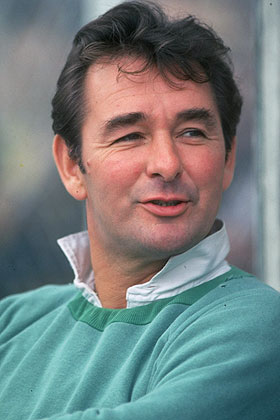
An Enduring Legend: Brian Clough

Brian Clough, a master of bombast and king of quirky one-liners, always held the media spellbound, but the scale of his influence is better conveyed in his prominence now than it ever was when he was alive.

Clough has been the subject of countless biographies, a novel and the film made from it. He won two European Cups with a provincial club and steered Derby County from the middle of the Second Division to the top of the First. He is, supposedly, the best manager the English national team never had.

In recent times, though, the media has concerned itself more with Clough’s most notable failure – his infamous 44-day stint as manager of Leeds United. David Peace’s The Damned United famously novelizes that ill-fated spell, portraying Clough as an enigmatic and self-destructive obsessive, haunted by the successes of his predecessor. Peace’s short, abrupt sentences are intended to mirror Clough’s thinking. While entertaining to read, that approach to understanding Clough is flawed. It casts him as a caricature, an exaggerated parody of a manager who, while eccentric, was always as human as the next man.

Continue reading

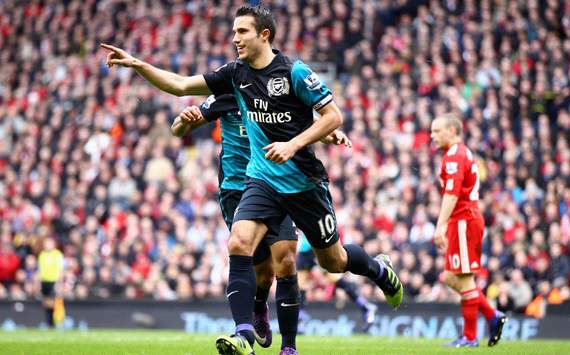
Arsenal Revival Comes Just In Time For Milan Clash

For Arsenal supporters, it has been a season of despair. Bad enough that new signing Gervinho was sent off during a 0-0 draw with Newcastle on opening day, but continued squad upheaval quickly obscured even that disaster. Fabregas delayed his departure long enough to convince many that he meant to stay, while Nasri’s move to City left an understandably bitter taste. Wenger’s response — a five-signing spree on deadline day — reeked of procrastination and left onlookers grumbling about a preference for quantity over quality.

By early winter, Wenger looked gaunt and frail, totally consumed by his cavernous rain jacket. Asrenal’s failure seemed to leave him more sad than angry, too resigned to his team’s fate to muster even a scowl. He lost faith in the team, so the fans lost faith in him.

The growing discontent crystallized when, at home to Manchester United, the Emirates crowd jeered Wenger’s decision to replace Alex Oxlade Chamberlain with Andrey Arshavin mid-way through a competitive second half. In a post-match interview, Wenger babbled about his experience and said he had made “thousands” of substitutions before.

Continue reading

England Prove That Just Showing Up Isn’t Enough

Woody Allen famously said that “90% of life is just showing up,” but at least one board of FA officials disagrees.

John Terry is cast by journalists as an embodiment of all that is wrong with professional football players. Rejecting common decency, parking in disabled spots and sleeping with a team mate’s ex-wife will do that to you. Even Terry’s initials — now a byword for the McClaren era complacency that permeated England’s failed Euro 2008 campaign — has negative connotations.

John Terry has let down Chelsea Football Club on both personal and footballing levels. He missed the penalty that would have won Chelsea the Champions League, and he has consistently failed in his ambassadorial responsibilities. It was he who heckled Americans in an airport days after 9/11, he who slipped to let Robin Van Persie score in October. Yet, despite innumerable managerial changes, Terry remains at the heart of the club’s plans. Captain, Leader, Legend.

Continue reading

Book Review: The Manager

It’s been a wild ride for the most important man in football. The role of the manager, British journalist Barney Ronay asserts, has developed dynamically, flourishing despite the multifarious perils of a thankless profession.

That ascent is the subject of The Manager, an entertaining if not particularly enlightening read. The audacious Ronay would surely snigger at any reviewer accusing him of comprehensive analysis or meticulous research. The Manager is too free wheeling for that nonsense. It is by turns a thematic history and a collection of anecdotes, but it is always a hilariously irreverent take on the increasingly ridiculous reality of top-level English football.

To enjoy The Manager, you must accept it for what it is: a charming narrative, but no great work of non-fiction. It’s not that Ronay is incapable of seriousness, he just chooses to avoid it, like a rebellious elementary school student too bored to resist clowning around. Ronay rejects contemplative analysis in favor of a more carefree, jokey approach. His prose is a concentrated mass of adjectives and allusions, a sometimes eloquent, sometimes annoying knot of compound descriptions.

Continue reading

A Lost Art: The Toe Ball

It is one of the great misconceptions of our sport that the toe ball is solely the domain of the inept, a weapon wielded only by the lazy and the stiff.

Along with the drag-back, infinitely less useful than you might think, proper shooting technique is the first thing emphasized at youth football programs. Coaches feel it is their prerogative to ignore time-honored techniques and beat into their players the importance of shooting with the laces, and the laces alone.

Sometimes, the first years of a player’s footballing eductation are spent eliminating the toe ball. At football summer camps, men in shiny new gear, smiles gleaming tote around carts full of “sweet spot straps” – wide rings of plastic that are strapped around a player’s kicking foot several inches above the toe. Not only do such devices cut off circulation, but they also tend to snap in half after making contact with the ball.

Continue reading

Retrospective: King Of The Nil

They say that the Premier League is no country for old men, that its dash and intensity are too much for the over-30s.

The year is still in its infancy, but already 2012 has proved the nay-sayers wrong. With the broad shouldered Phil Jones losing impulsive cult followers with every passing game, English football is turning to tried and tested players.

In its perpetual quest to destabilize the English national team, club football has sent a resounding message. The returns of Paul Scholes to Manchester United and Thierry Henry to Arsenal are reminders that the Premier League lacks faith in the youth game, and that its cynical commercialism trumps all. Fancy a Paul Scholes No. 22 shirt?

However, 2011/12 will never seduce the Premier League’s most recent retiree. Edwin Van Der Sar’s career ended in May, without an asterisk. But United fans remember him, with throbbing temples every time David De Gea leaps for a corner, or Anders Lindegaard’s complacent feet encourage an opposing striker to press high-up the pitch. The ghost of Van Der Sar still haunts the United penalty area, undermining its youthful commanders.

Continue reading